
THE LIGHT THAT MADE THE PAINTERS
Following Van Gogh and Cézanne through Provence,
and why the light is still the point
All future articles will be posted on our Substack at https://byhande.substack.com/
There is a reason the walls of the world's great museums are so full of this small corner of France. The painters came to Provence for the light, and the light is still here, unchanged and available for the price of standing still and looking. You do not need to know a thing about art history to feel it. But knowing a little turns a beautiful drive into something closer to a pilgrimage, and Provence rewards the pilgrim.
VAN GOGH IN ARLES AND SAINT-RÉMY
Vincent van Gogh came to Arles in 1888 and, in a burst of a little over a year, painted some of the most famous canvases in the world: the yellow house, the café terrace at night, the sunflowers, the starry night over the Rhône. He was chasing exactly the thing you will notice within an hour of arriving, a light and a color so intense it seems to vibrate. You can stand in the Place du Forum where the café terrace still glows yellow after dark, walk the banks of the Rhône where the stars went into the water, and understand, standing there, that he was not exaggerating. He was reporting.
A short drive away in Saint-Rémy-de-Provence is the monastery of Saint-Paul de Mausole, where Van Gogh spent a year in the asylum and, astonishingly, painted through it: the olive groves, the cypresses, the wheat fields of the surrounding Alpilles, and the swirling Starry Night itself. The landscape around it is still recognizably his. The cypresses still stand like green flames. It is a quietly moving place, and it costs almost nothing to visit.
CÉZANNE IN AIX
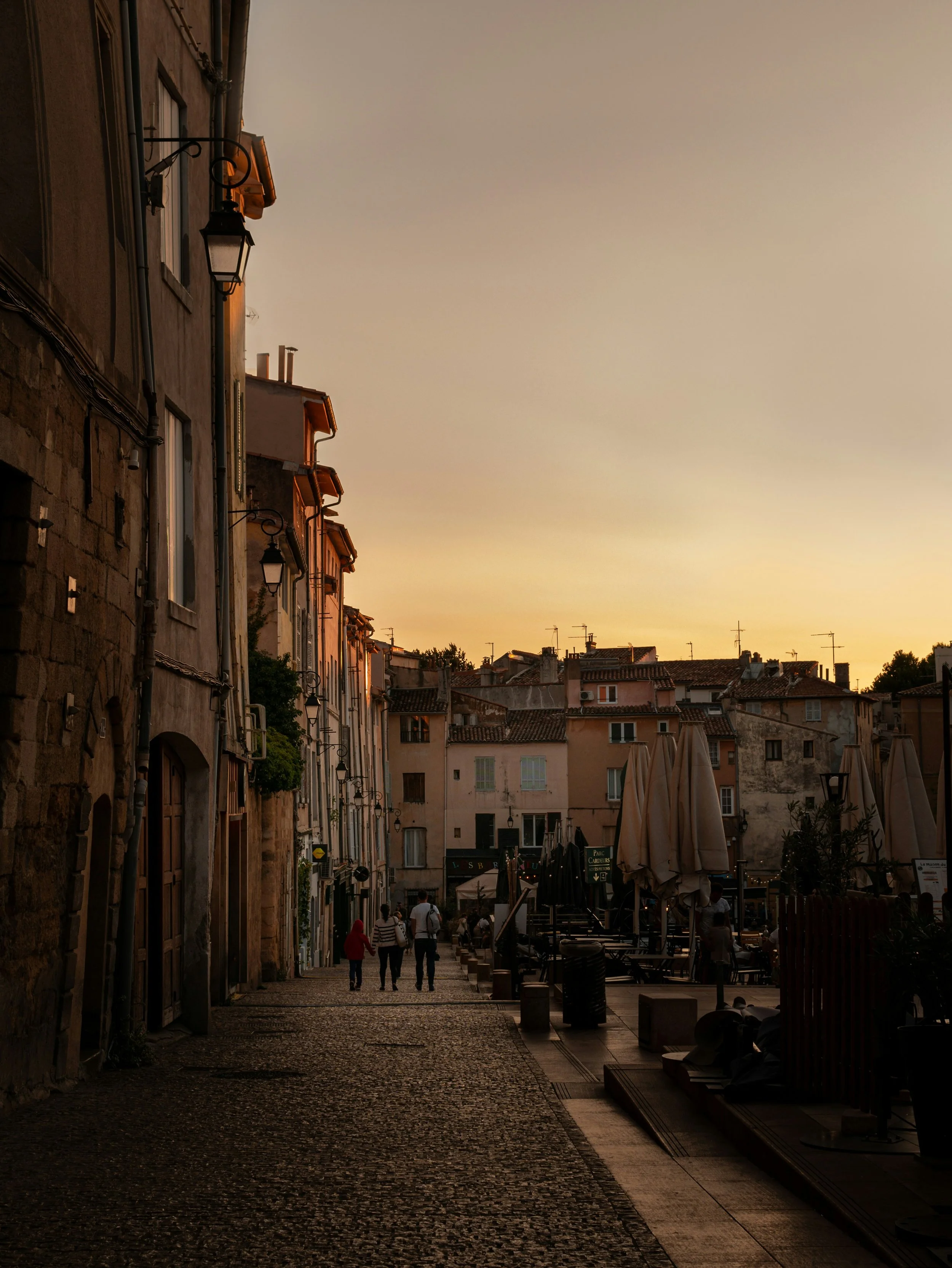
Aix-en-Provence belongs to Paul Cézanne the way few cities belong to any one person. He was born here, worked here, and returned again and again to a single subject, the Montagne Sainte-Victoire, the long limestone ridge east of the city, which he painted dozens of times as he tried to hold its shape and its light on canvas. You can visit his atelier, the studio at Les Lauves, left much as it was, with the objects from his still lifes on the shelves, and then drive out to the viewpoints where he set up his easel and see the mountain doing, in real time, the thing he spent a lifetime chasing. The city itself, with its plane-lined Cours Mirabeau and its fountains, is one of the most civilized places to spend a day in all of Provence.
THE LIGHT SHOW YOU DID NOT EXPECT
If you want the paintings themselves, delivered in a way that will surprise even people who think they don't like that sort of thing, go to the Carrières des Lumières near Les Baux-de-Provence. It is a vast old limestone quarry, its walls and floor turned into a screen, where enormous projected images of the paintings move across the stone to music. It sounds like a gimmick and it is genuinely stirring, the canvases blown up to the size of cliffs, Van Gogh's yellows pouring down forty feet of rock. Pair it with the citadel village of Les Baux above and you have one of the best half-days in the region.
WHY IT STILL MATTERS
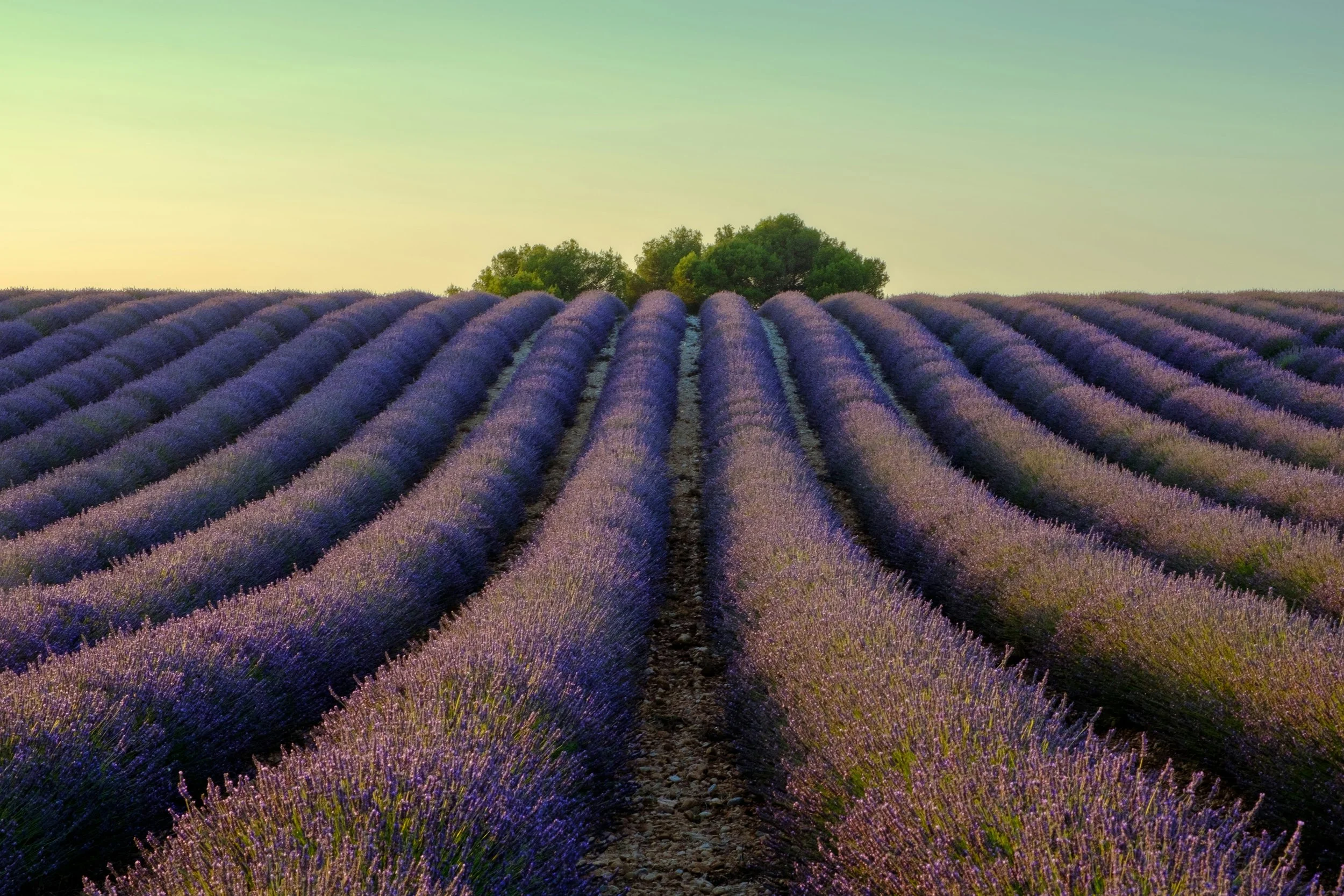
Here is the thing that stays with you. The painters did not invent the light. They just noticed it, and had the skill to carry it home. What that means for the rest of us, the ones who can barely draw a convincing cat, is that the source material is still here, free and undimmed, waiting. The same gold on the same limestone. The same cypresses. The same afternoon that lasts and lasts.
So look at the canvases, by all means, in Arles and Aix and on the quarry walls. But then step outside and look at the thing itself, the light on an ordinary wall at five in the afternoon, and understand that you are seeing exactly what they saw. That is the rare gift of this place. The museum is beautiful, and it is also just the countryside, and you are standing in it.