
WHO ELSE LIVES UP HERE?
The wild animals, the working cows, and the meaning of all those bells in the Swiss Alps
All future articles will be posted on our Substack at https://byhande.substack.com/
You hear the Alps before you understand them. Somewhere on your first morning, up a green slope you can't quite see, there is a sound: an irregular, tuneless, oddly companionable clanking that rises and falls with no particular rhythm. It takes a moment to place it, and then you do. Cowbells. Dozens of them, drifting down through the clear air from a pasture you cannot see, and once you have heard it you will hear it everywhere, and you will come, we promise, to love it. The mountains look empty from the valley floor. They are, in fact, quietly full of residents, wild and domestic, and getting to know a few of them turns a beautiful view into a place with neighbors.
THE WILD ONES
The Alps have what the marketing people, who cannot leave anything alone, have taken to calling the Big Five: the ibex, the chamois, the marmot, the golden eagle, and the bearded vulture. It is a better list than it sounds.
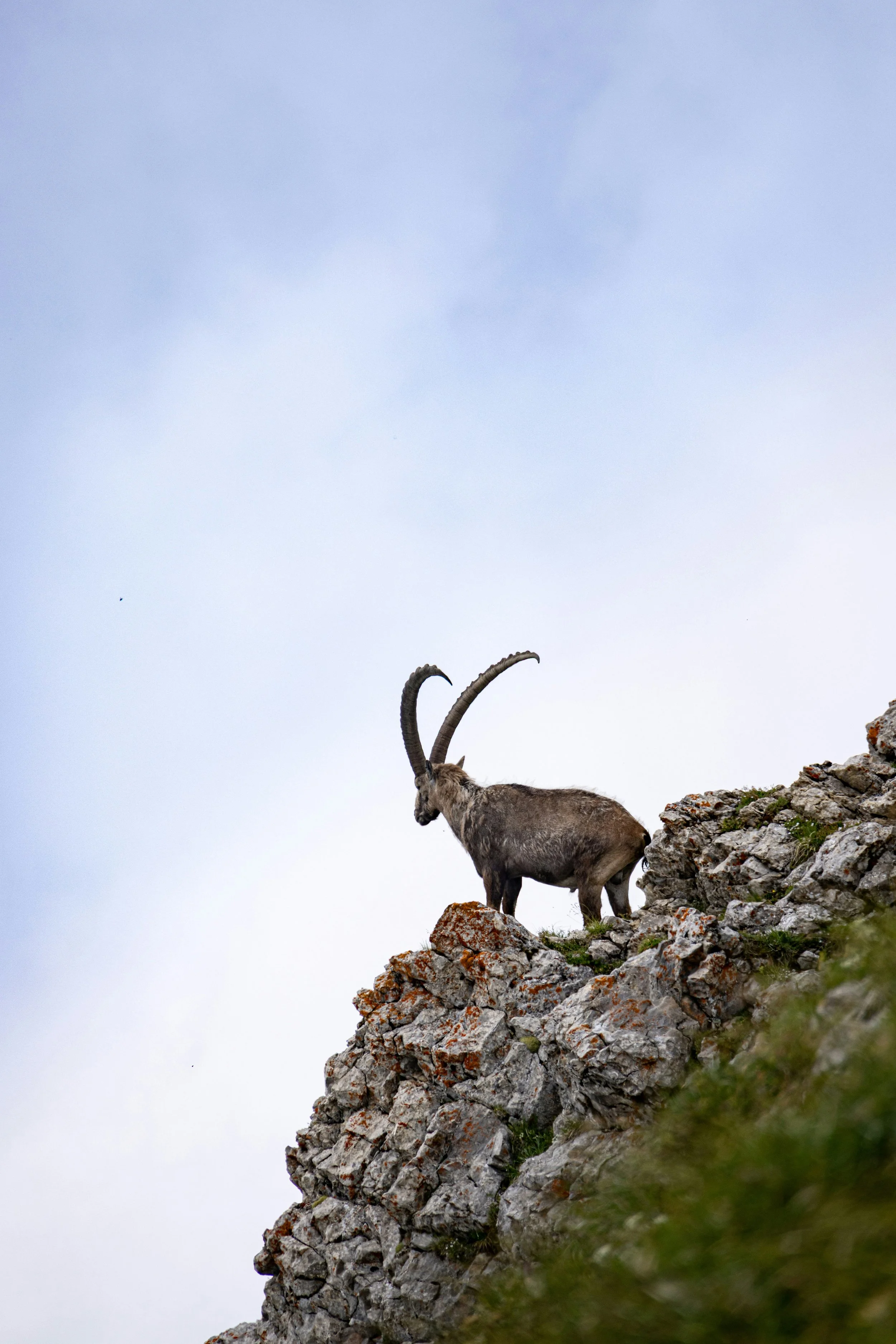
The ibex is the star, a wild mountain goat with great scimitar horns and an apparently sincere belief that gravity is optional, picking its way across near-vertical rock as though strolling to the shops. It is also a conservation miracle. Hunted to extinction across Switzerland by the nineteenth century, it was quietly reintroduced beginning in the 1920s, and there are now something like twenty-one thousand of them back in the mountains. The more numerous chamois, a smaller, nimbler goat-antelope, numbers around ninety thousand and is the one you are most likely to spot flowing across a scree slope.
The marmot you will more often hear than see. These are big, sociable, burrowing rodents, the largest members of the squirrel family, and they post sentries who let out a sharp, startling whistle at the first sign of an eagle or a hiker, at which point the entire slope vanishes down its holes. Overhead, Switzerland has around three hundred and fifty breeding pairs of golden eagle. And then there is the bearded vulture, the lammergeier, a genuinely enormous bird with a wingspan approaching three metres and the unusual habit of eating bones, which it drops from a height to crack open. It too was wiped out in the Alps in the nineteenth century, shot as a supposed menace, and it too has come back, reintroduced from 1986 onward and now slowly re-established. To these you can add red deer, foxes, the acrobatic alpine chough, and, increasingly, the lynx and the wolf, which have returned to Swiss mountains in recent decades and stirred up exactly the arguments you would expect. The Alps, in short, are busier than they look.
THE COWS, AND WHY THEY MATTER SO MUCH
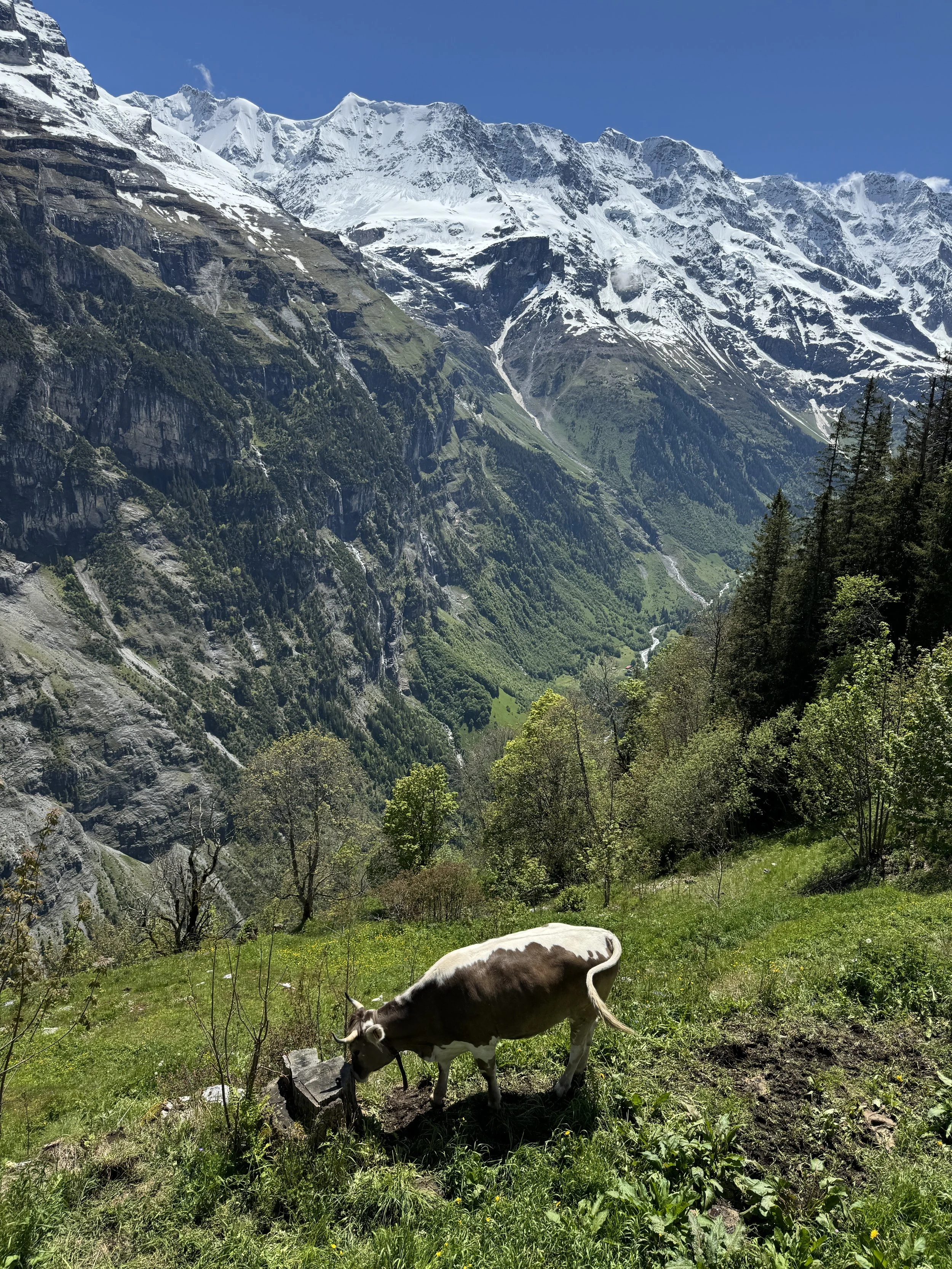
Which brings us to the animal that actually runs the place. The cow is not merely present in Switzerland; it is close to a national emblem, and for good reason. Cattle farming has been the primary work of these mountains since around the year 1300, and the whole shape of Swiss rural life has been organized around it ever since.
There are cows and there are cows. The gentle grey-brown Braunvieh, better known abroad as Brown Swiss, and the rust-and-white Simmental are the great dairy breeds. But our favorite piece of bovine culture belongs to the Valais, where the Hérens cattle are bred not only for milk but for temperament: these are the famous fighting cows, and each spring the herds hold their own contests, the combats de reines, in which cows jostle and shove to establish a hierarchy and crown a "queen." No one is hurt, everyone is very serious about it, and it is one of the most wonderful things we have ever watched a crowd of Swiss people care deeply about.
WHY THE LITTLE SHACKS ON THE HIGH SLOPES
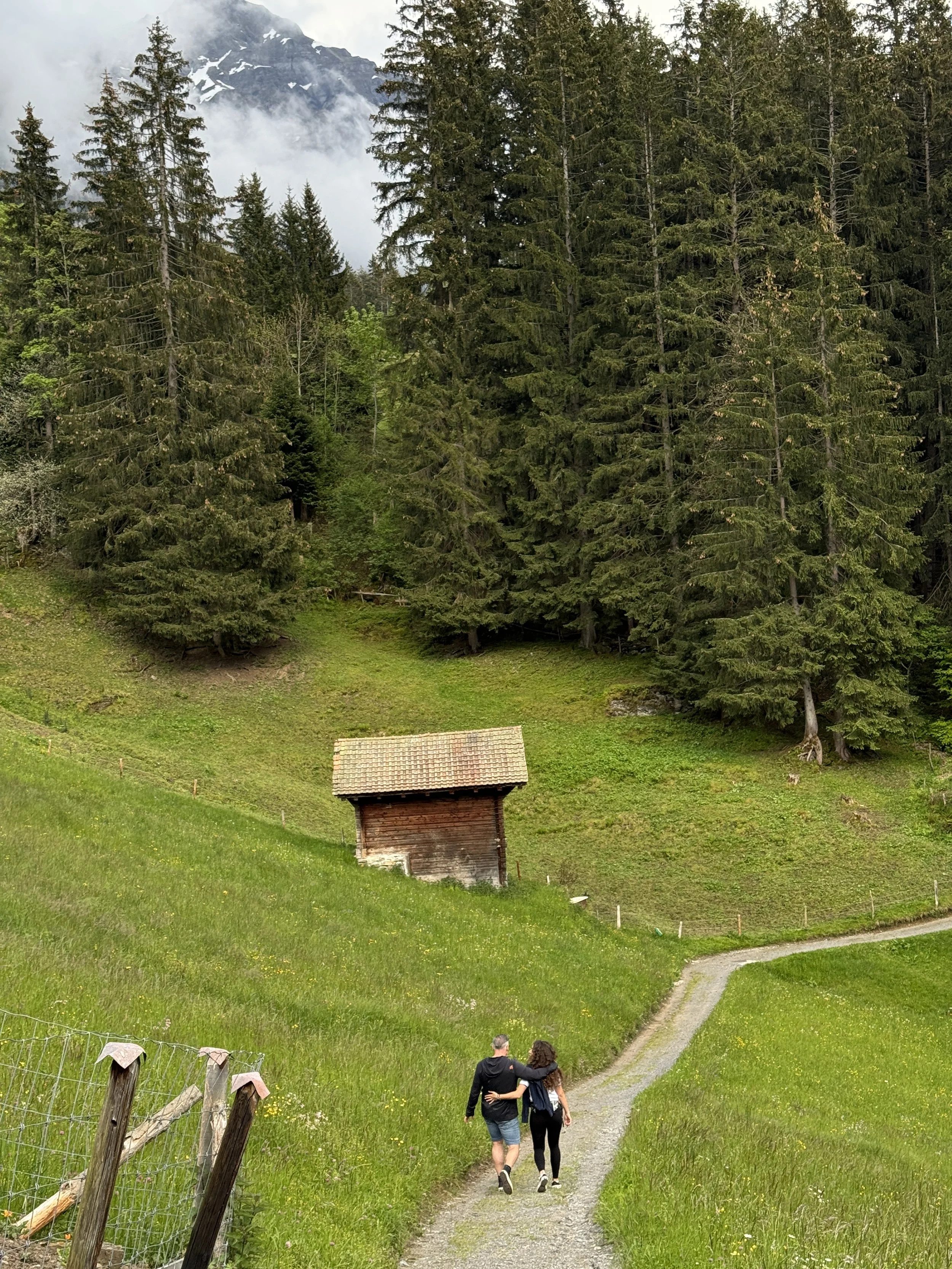
Look up at almost any Alpine pasture and you will see them: small stone or timber huts, far above any village, apparently in the middle of nowhere. These are not holiday cabins. They are working buildings, and they explain the entire summer.
The system is called transhumance, and it is very old. In summer, the herds are walked up from the valleys to the high pastures, the alp, where the grass is fresh and rich and only usable for a few warm months. Something like a hundred and thirty thousand dairy cows go up each year, and these high pastures make up a remarkable third of all Swiss farmland.
A herder and cheesemaker, the Senn, goes up with them and lives in that little hut for the season, because up here is where the work happens. The reason is beautifully practical: you cannot easily get fresh milk down a mountain every day, but you can turn it into cheese, which keeps. So the shack is a dairy. The milk becomes wheels of genuine Alp cheese, so tied to this practice that Swiss law reserves the official Alpkäse label for cheese actually made up on the mountain during the summer. The move up is a small festival called the Alpaufzug. The move down in autumn, the désalpe, is a bigger one, and it is where the bells come fully into their own.
THE BELLS, AND WHAT THEY MEAN
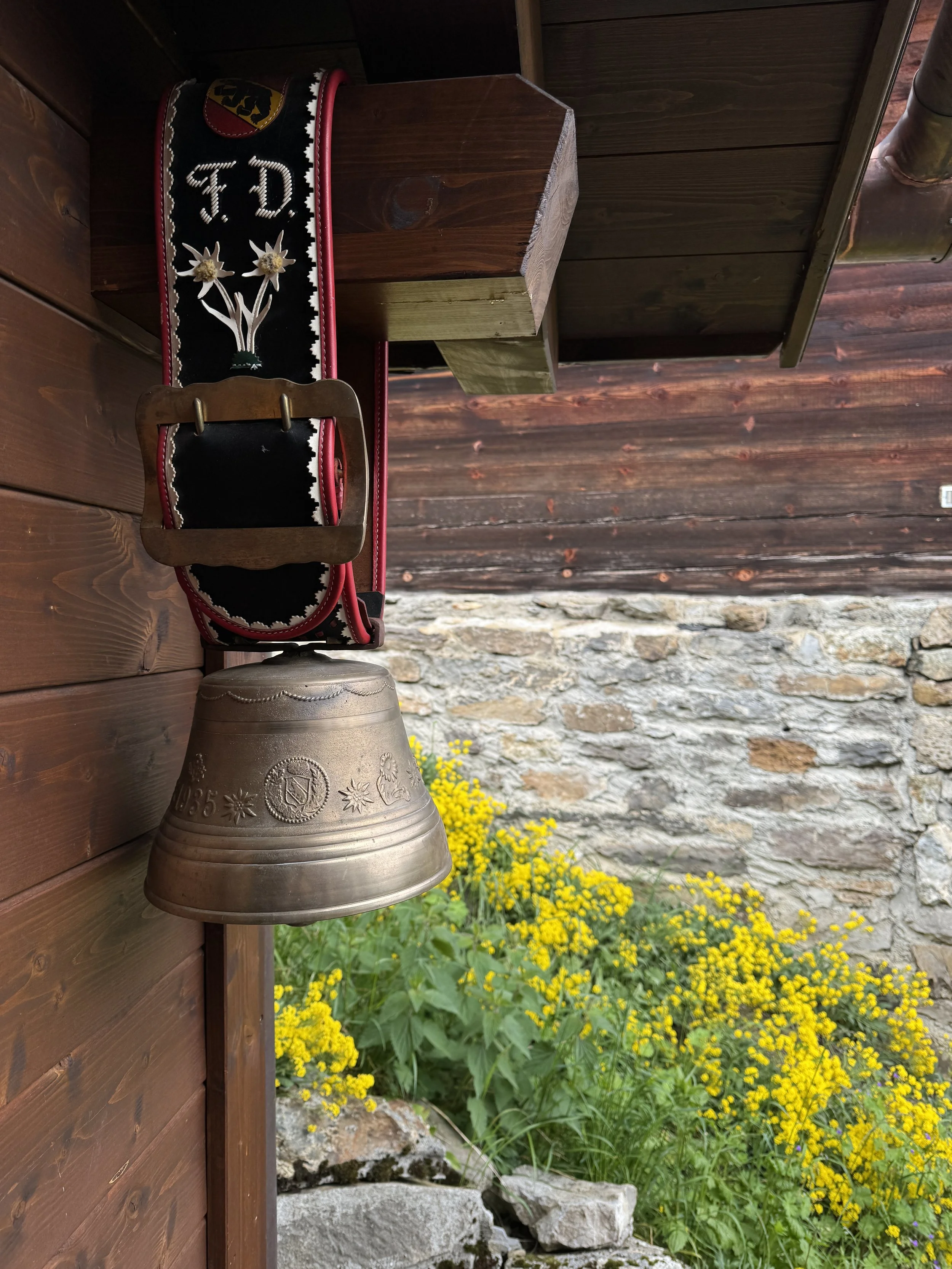
The cowbell began as the most practical object imaginable. Since at least the Middle Ages, a bell around the neck let a herder find his animals in fog, in forest, or over the next rise, which in this landscape is not a small problem. Over time the craft grew, and by the eighteenth and nineteenth centuries bell-making was a specialty, with brass and forged sheet metal prized for a tone that carried farther across the valleys. The Swiss distinguish the big forged Treicheln, deep and clanging, from the cast Glocken, and a fine large bell was once a genuinely coveted and expensive thing, the subject of folk tales and no small amount of envy.
There is a quiet hierarchy in the sound. The biggest, deepest bell goes to the lead animal, often the best milker or the herd's dominant cow, so that the others have a beacon to follow. And at the désalpe, when the herds come down in autumn crowned with flowers and paper roses, that lead cow wears her enormous bell at the front of the parade through the village while the whole community turns out to greet them. It is not staged for tourists, though tourists are welcome to enjoy it. It is a working procession that happens to be beautiful, a village celebrating the safe return of its herds and its summer's work in cheese.
To the Swiss, the sound means something close to home itself. It is the audible signature of the mountains, of the seasons turning, of a way of life that has survived into a country better known for banks and precision watches. Which is not to say everyone agrees about it. The bells are loud, genuinely loud, and every so often a newcomer to a village, having bought a lovely quiet chalet next to a lovely noisy pasture, files a complaint about the racket, and periodically someone proposes limiting the bells on animal-welfare grounds. These disputes tend to go about as well for the complainant as you would imagine in a country where the cowbell is practically a member of the family. The Swiss, faced with a choice between peace and quiet and their cows, choose their cows. We find that entirely to their credit.
WHAT IT ALL ADDS UP TO
Spend a little time with all this and you notice it is not a collection of quaint separate customs but a single, working whole. The wild ibex on the cliff and the belled cow on the pasture and the cheesemaker in his hut and the flower-crowned parade in the autumn street are all part of the same idea: that a mountain is not scenery to be looked at but a place to be lived in and worked with, through the seasons, at the pace the seasons allow. The bells are the sound of that idea, ringing away up a slope you cannot see. Listen for them on your first morning. By the last, you will understand that you have been hearing the Alps introduce themselves the whole time.