We Came for a Week. Andalusia Had Other Plans.
Why we stayed longer…
BY TATYANA & SCOTT - COSTA DEL SOL JOURNAL NO. 1 - 8 MIN READ
All future articles will be posted on our Substack at https://byhande.substack.com/
We had booked nine nights. We told ourselves that was generous… a full week and a little more, enough to see the famous places and still have a morning or two with nothing on the calendar. By the third evening, sitting in the Plaza de los Naranjos with the orange trees going dark above us, we both already knew the truth of it. Nine nights was not going to be enough. It rarely is, in the places that are actually worth the trip.
This is the first entry in our Costa del Sol journal, the unhurried version of a corner of southern Spain that most people pass through in a handful of days on the way to somewhere else. We stayed, basing ourselves in one place, and we let the region come to us. Here is why we couldn't bring ourselves to leave on schedule.
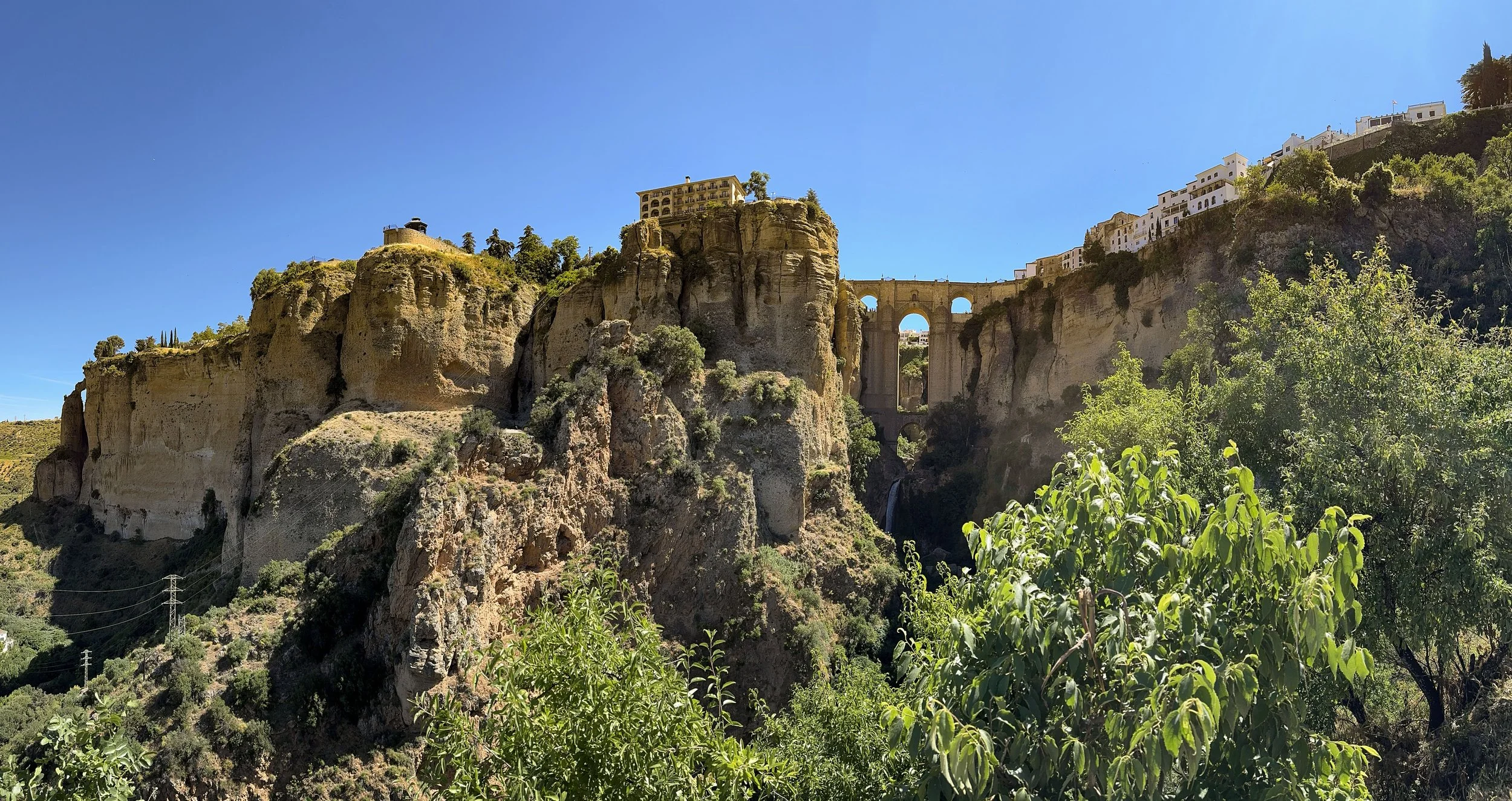
Ronda in late morning in early June. © 2026 Tatyana & Scott.
THE BASE
Why we chose to live in Marbella
Marbella arrives with a reputation: yachts, a certain kind of glamour, a name that does it few favors with travelers who prefer their Spain a little more honest. We almost skipped it for exactly that reason. We're glad we didn't. Behind the resort postcard is an Old Town that has been there far longer than the marina: the Plaza de los Naranjos with its orange trees and its sixteenth-century church, the Iglesia de la Encarnación, the remains of the Moorish walls, and a knot of narrow tapas streets that empty out the moment the day-trippers drive back to their hotels.
But the real reason we based in Marbella was geography. Sit with a map of Andalusia for an afternoon and you notice that this stretch of coast is almost exactly equidistant from everything we wanted to see. Ronda is a little over an hour up a mountain road. Málaga is fifty minutes east. The cliff path at Caminito del Rey, the white villages, the gorge towns, all of it sits inside a comfortable morning's drive. Seville and Granada are each a couple of hours, close enough for a long day, far enough to feel like a different world when you arrive. We wanted one home to return to each night rather than a new set of keys every two days. Marbella gave us that, and an azure sea to come back to.
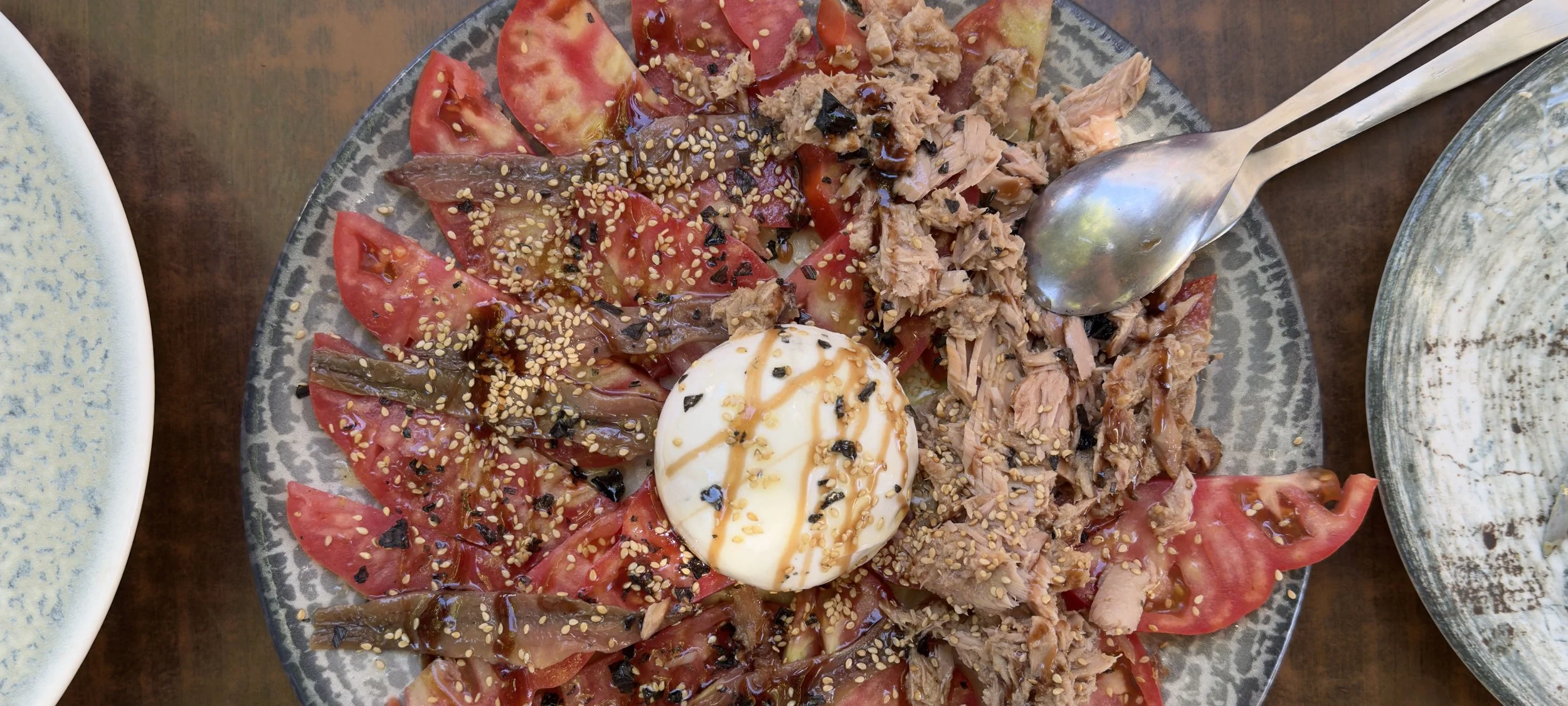
A favorite at Las Flores beach club, near Marbella. © 2026 - Tatyana & Scott.
THE GIFT
What more time actually buys you…
There is a particular arithmetic to travel that nobody tells you. The first day in a place is spent learning where the bread is. The second is spent recovering from the first. It is somewhere around the fourth or fifth day, long after most itineraries have moved on, that a place finally stops performing for you and simply lets you in. That is the day the man at the café starts your coffee before you order it. That is the day you stop photographing the view and start actually looking at it.
More time did not mean more sights. It meant the opposite. It meant we could give Ronda a slow lunch at Tragata instead of a rushed photograph of the bridge. It meant that when the morning at Caminito del Rey ran long, we could let it, and still wander Málaga's old center in the afternoon without watching the clock. It meant we could lose an entire day to nothing in particular and not feel we had wasted it, because the nothing-in-particular days, it turns out, are the ones we remember most clearly now that we're home.
We could see Andalusia in a week. But, we could only feel it if we stayed long enough to stop counting the days.
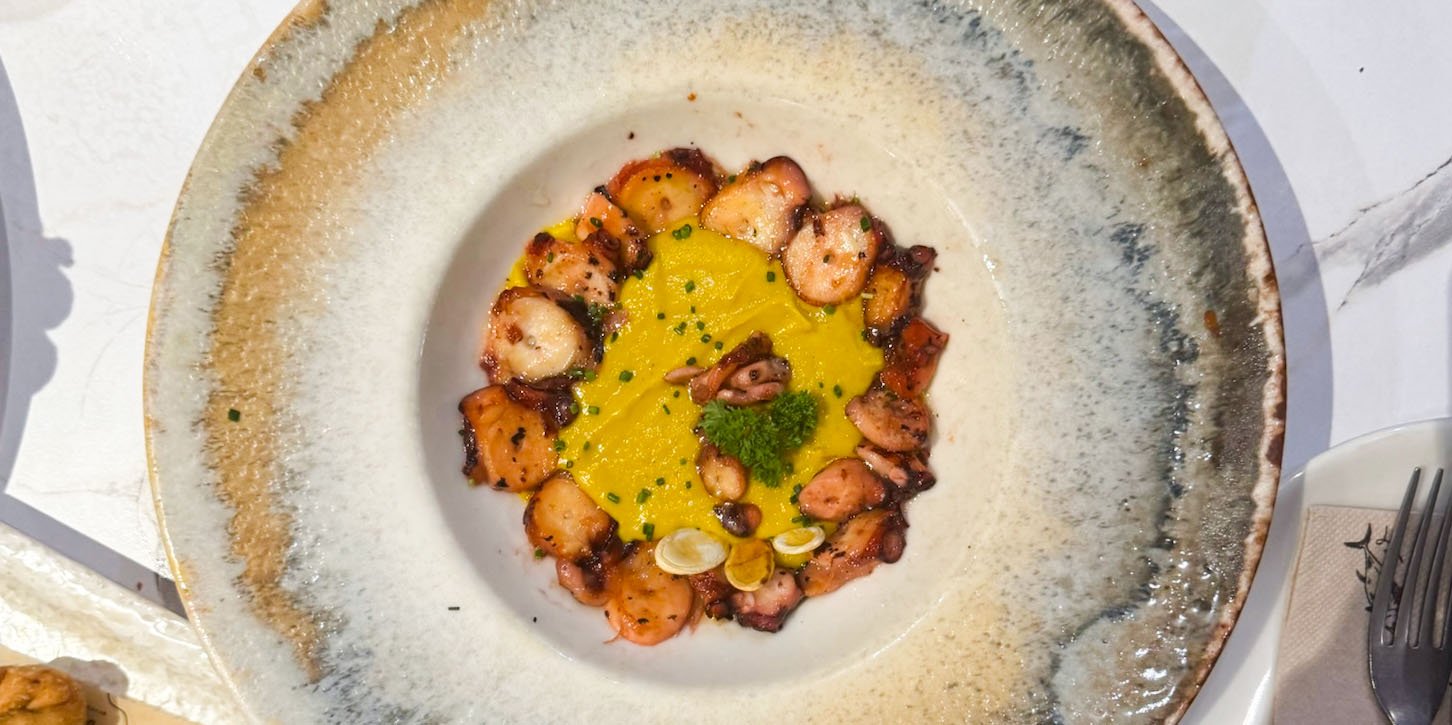
Octopus tapas near the Las Setas de Sevilla (The Mushrooms of Seville). It is located in the Plaza de la Encarnacion. © 2026 Tatyana & Scott.
THE RANGE
Why Andalusia refuses to be one thing
What makes this region unforgettable is not any single place. It is the range, how far the landscape and the centuries travel inside a single short drive. In one day you can stand on the Puente Nuevo in Ronda, looking down a hundred metres of sheer gorge that splits the town in two, and by evening be eating in a street in Setenil de las Bodegas where the houses are built directly under an overhanging cliff, the rock pressing down over your table like a low ceiling the earth forgot to finish.
Drive another morning and the register changes entirely. Granada gives you the Alhambra at the hour the guides avoid, late, golden, the Nasrid palaces emptying out and the gardens going quiet, the snow still on the Sierra Nevada behind it. Seville is all heat and grandeur: the largest Gothic cathedral in the world, the Mudéjar ceilings of the Real Alcázar, the absurd beautiful sweep of the Plaza de España at the end of the afternoon. The coast near Nerja is something else again, the Balcón de Europa, the clear water at the coves, the kind of Mediterranean light that makes you understand why people never leave. Mountains, palaces, gorges, white villages, cathedral cities, and the sea, all of it reachable from one front door. No single day looks like the one before it.
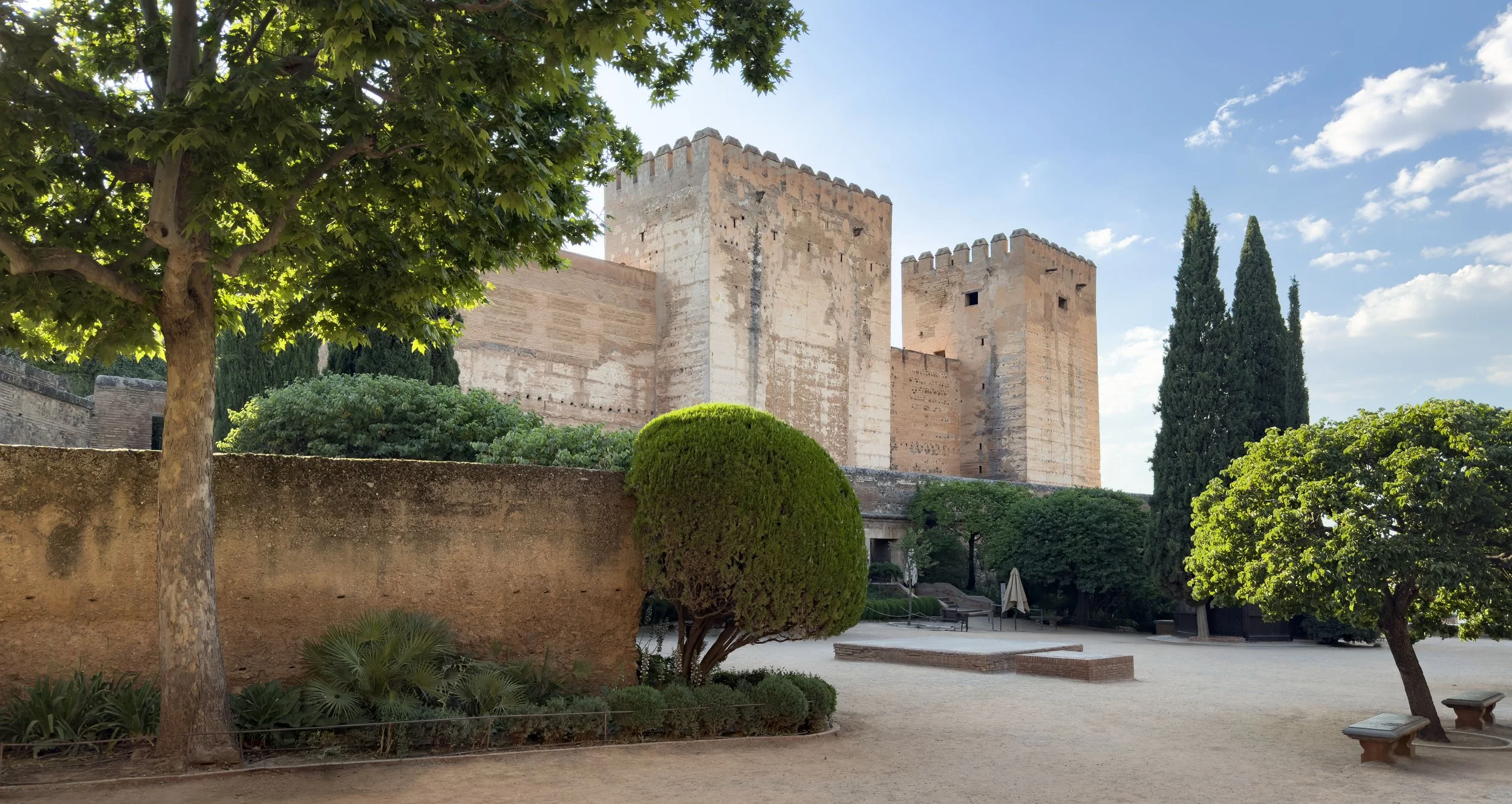
Alhambra on a June evening. © 2026 Tatyana & Scott.
THE IN-BETWEEN
The places between the places
The famous sights are famous for good reason. But the moments we keep returning to in conversation are almost all the ones we found in the gaps, the towns we only meant to drive through, the viewpoints with no name, the in-between. If you give Andalusia the time, this is what it rewards you with.
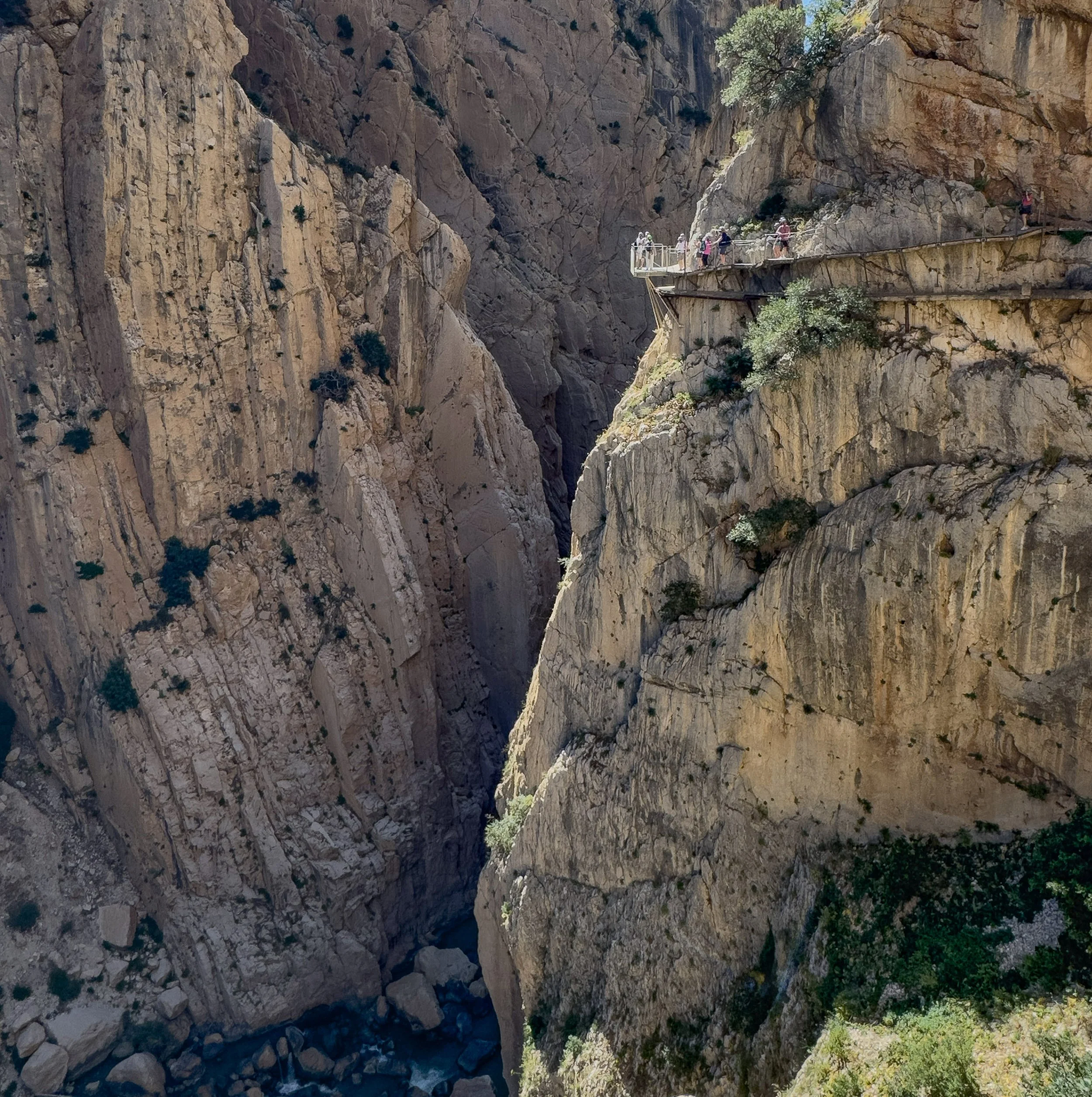
The Caminito del Rey trail experience in June. © 2026 Tatyana & Scott.
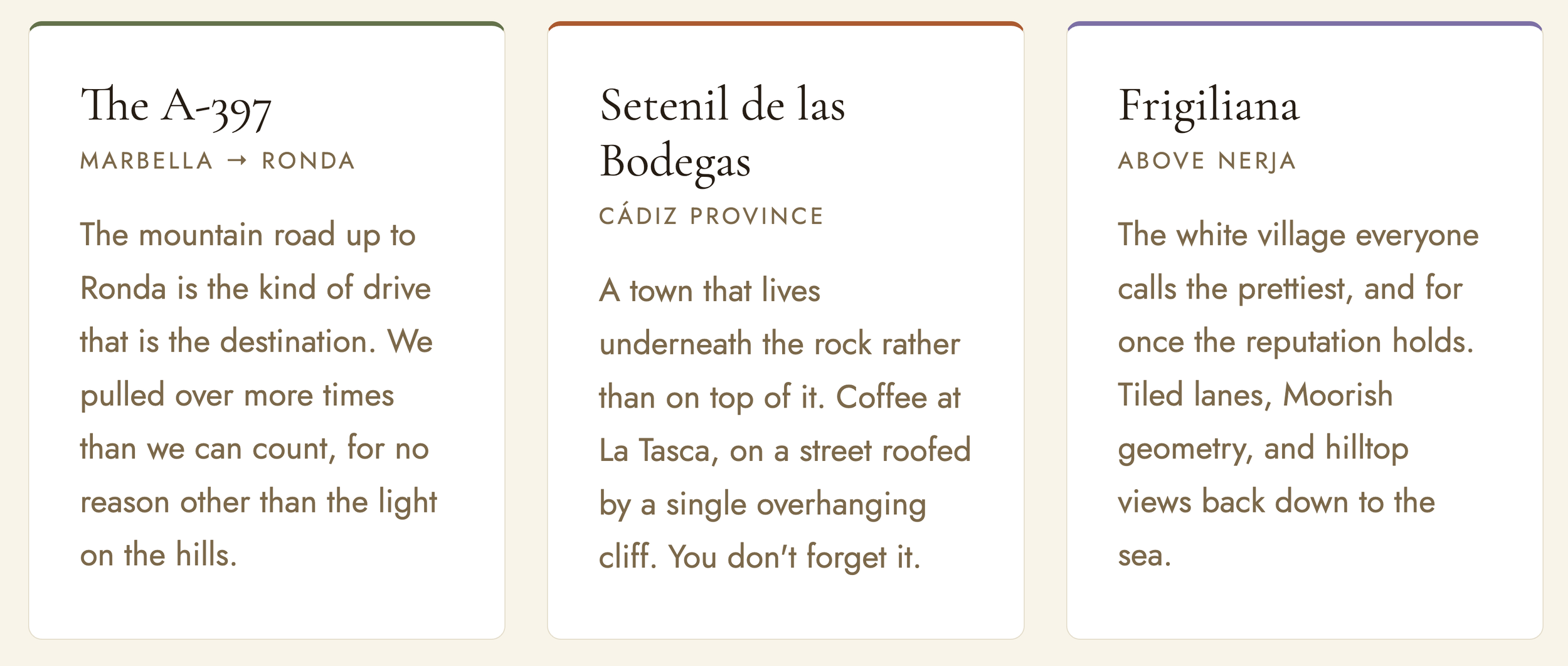
None of these were the reason we came. All of them are part of the reason we stayed.
THE LESSONS
The quiet things Andalusia taught us
We came home with the usual things, a little ceramic from a shop in the Santa Cruz quarter, a few recipes that Tatyana has mastered with Scott as sous chef, a phone full of light. But the things that stayed with us were quieter than that.
The first is the late lunch. Andalusia does not rush its midday table, and neither, we learned, should we. The two-hour lunch is not laziness; it is a civilization's considered opinion on how a day should be spent, and after a week of it we stopped resisting. The second is that a place opens to you in proportion to the attention you give it, a few words of clumsy Spanish, a willingness to eat where the menu isn't translated, a question asked of the right person. The bridges go up faster than you'd think, and they go both ways. And the third, the one we keep coming back to: the best part of the trip was almost never the thing we had planned. It was the detour, the long table, the evening we stayed out because no one wanted to suggest going home.
THE RETURN
Why we already know we'll go back
We left with a number of interests for returning. We never made it to Zahara de la Sierra, the white village stacked under a Moorish castle above a turquoise reservoir, though we saw it on the map every single day and promised ourselves the drive. We didn't kayak to the waterfalls at Playa de Maro. We gave Granada an evening when it deserved three, and we’d like more time with the surreal limestone of El Torcal de Antequera.
That is the real argument for slow travel, in the end. You do not leave a place like this feeling that you've finished it. You leave understanding how much is still there, waiting… and you start, somewhere on the drive back to the airport, quietly anticipating the next time. We came for a bit over a week. Andalusia, it turned out, had other plans. We intend to let it have them again.