The working city at the foot of the lake, which almost everybody walks straight past
All future articles will be posted on our Substack at https://byhande.substack.com/
Here is what happens to most visitors. You arrive at Como, the town that gives the lake its name, you walk from the station to the water, and you get directly onto a ferry bound for somewhere prettier. Como is treated as a turnstile. We did roughly this ourselves the first time, and we have been quietly making up for it ever since, because the town at the foot of the lake turns out to have two of the most interesting stories in northern Italy, and hardly anyone stops long enough to hear either of them.
The short version: this modest city clothed the world in silk, and it invented a good chunk of modern Italian architecture. Also the volt is named after a local. Bear with us.
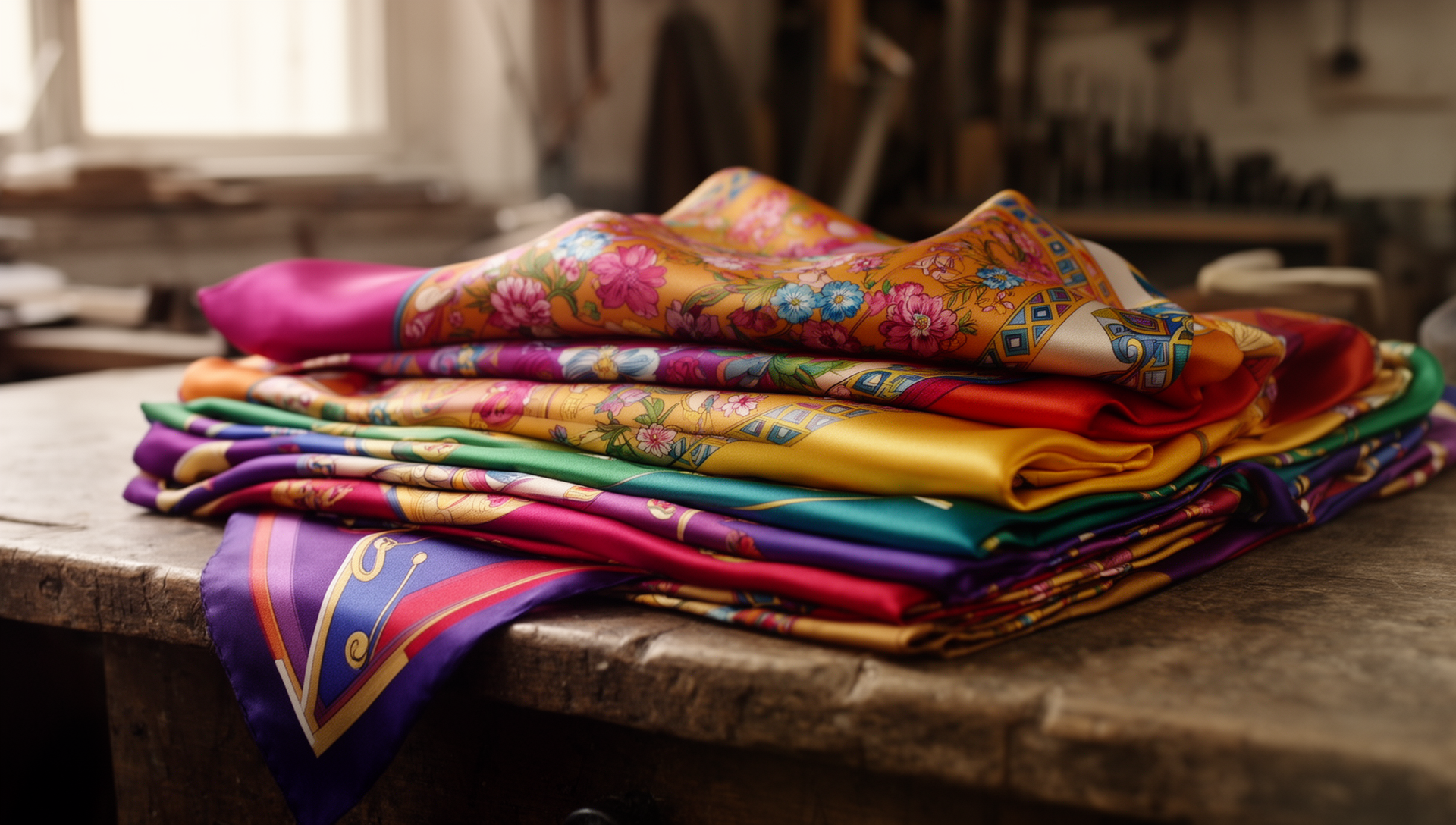
THE TOWN THAT MADE THE WORLD'S SCARVES
Silk spinning around Como goes back to the sixteenth century, but it was the late nineteenth that turned it into the region's defining industry, with mulberry trees, mills, and dye works spreading through the valleys. In 1869 the town founded a proper school for silk craftsmen, the Setificio, and by the 1920s the great fashion houses had noticed. Since then, if a luxury silk tie or scarf carries a famous French or Italian name, there is an excellent chance the fabric was woven, printed, or finished right here. Chanel, Hermès, Valentino, Versace, Armani and their peers have all sourced from Como.
The statistic that stopped us in our tracks is this: by 1972, silk production in Como had surpassed that of China and Japan combined. A modest lakeside city in Lombardy, out-producing the two ancient homelands of silk. The industry today is smaller and far more specialized, focused on the high end where the printing and finishing are genuinely artistry, but dozens of firms still operate here and thousands of people still work in it.
You can see the whole story at the Museo della Seta, the silk museum, which is exactly the kind of place we love: unglamorous, thorough, and full of the actual machines, looms, dyeing equipment, and printing tools that did the work. It gives you the entire arc from cocoon to couture in an hour and it will permanently change how you look at a printed scarf. And yes, the town has shops and outlets where you can buy the real thing at prices that make a Paris boutique look eccentric.
THE TOWN THAT INVENTED MODERN ITALIAN ARCHITECTURE
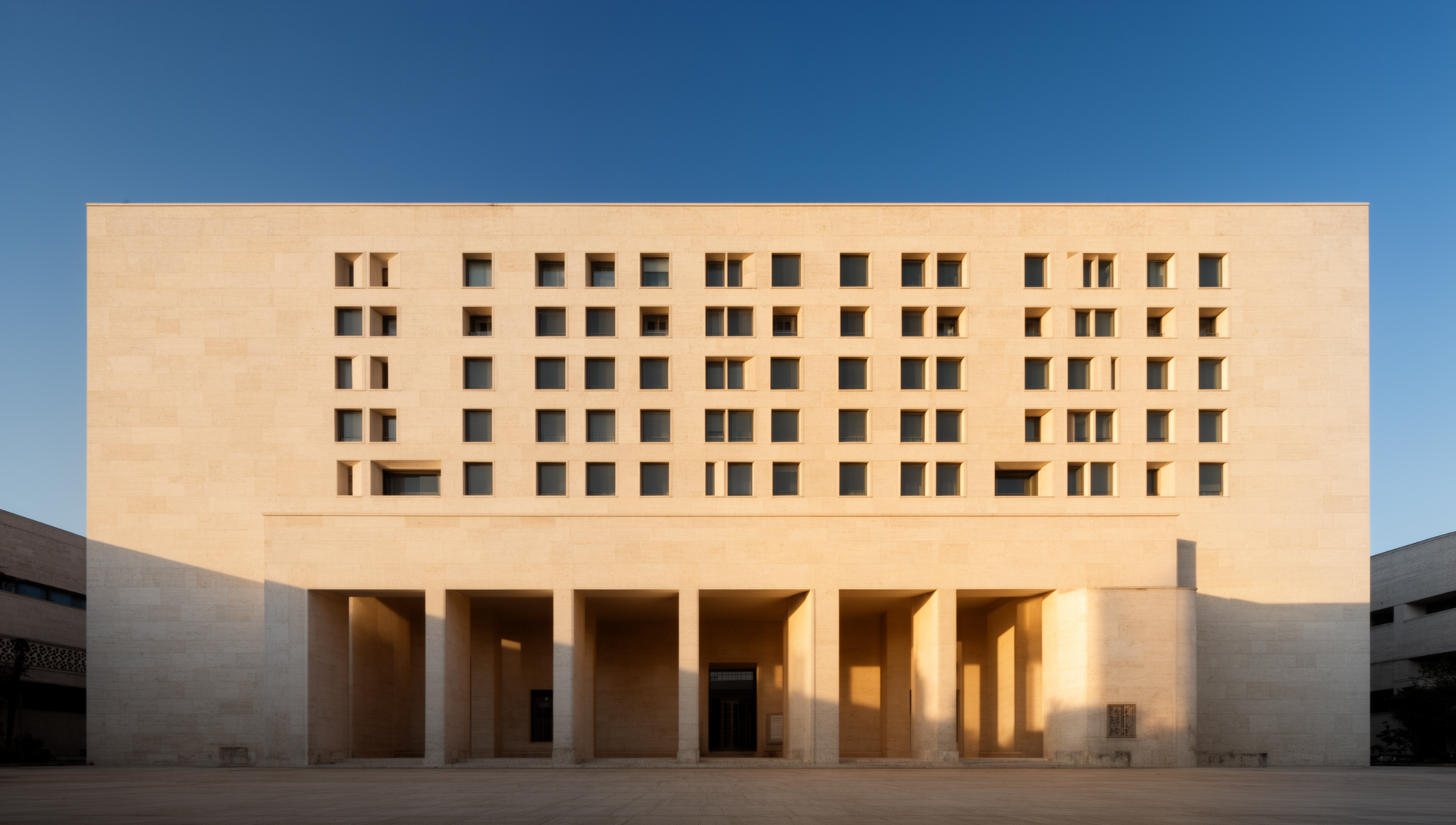
Now the part that surprises people even more. Como is the birthplace of Italian Rationalism, the country's great modernist movement, and its most important buildings are standing right here in ordinary streets, largely unvisited.
The central figure is Giuseppe Terragni, born in 1904, who studied in Milan and set up practice with his brother in his home town. In 1926 he helped form Gruppo 7, a band of young architects who had had quite enough of columns, pediments, and baroque flourishes, and who wanted buildings built on logic, proportion, light, and modern materials.
His first significant work is the Novocomum, an apartment block from 1927 to 1929 with curved glazed corners that so alarmed the locals they nicknamed it the ocean liner. His masterpiece, and the single most studied building of Italian Rationalism, is the Casa del Fascio, built between 1932 and 1936 on a square just behind the cathedral. It is worth standing in front of even if architecture is not usually your thing, because the idea is legible in about four seconds: the plan is a perfect square of 33.2 metres, and the height is 16.6 metres, exactly half the width. It is a half cube, faced in pale Botticino marble, hollowed out with a glazed courtyard so that light passes through it. Calm, rational, transparent, and quietly radical for its moment.
Terragni also built the Asilo Sant'Elia, a kindergarten of glass and air designed on the then novel theory that small children might learn better in daylight with a garden to run into. And near the lakefront stands the town's war memorial, a stark stepped tower built from the drawings of Antonio Sant'Elia, the visionary Futurist architect who was born in Como and killed in the First World War at twenty-eight, having built almost nothing and imagined almost everything.
THE UNCOMFORTABLE PART, SAID PLAINLY
We are not going to tiptoe around this. The Casa del Fascio was built as the local headquarters of the Fascist party, and Terragni worked under Mussolini's regime, as did most Italian architects of his generation who wanted to build anything at all. The name on the building is not decorative. It is what it was.
That sits uneasily alongside the fact that it is a genuinely beautiful and enormously influential piece of design, and we think the honest response is to hold both things at once rather than choose the comfortable one. Architecture historians have been arguing about exactly this for eighty years. Standing in front of it, knowing what it was for, is a more interesting experience than admiring it innocently, and considerably more interesting than pretending it isn't there.
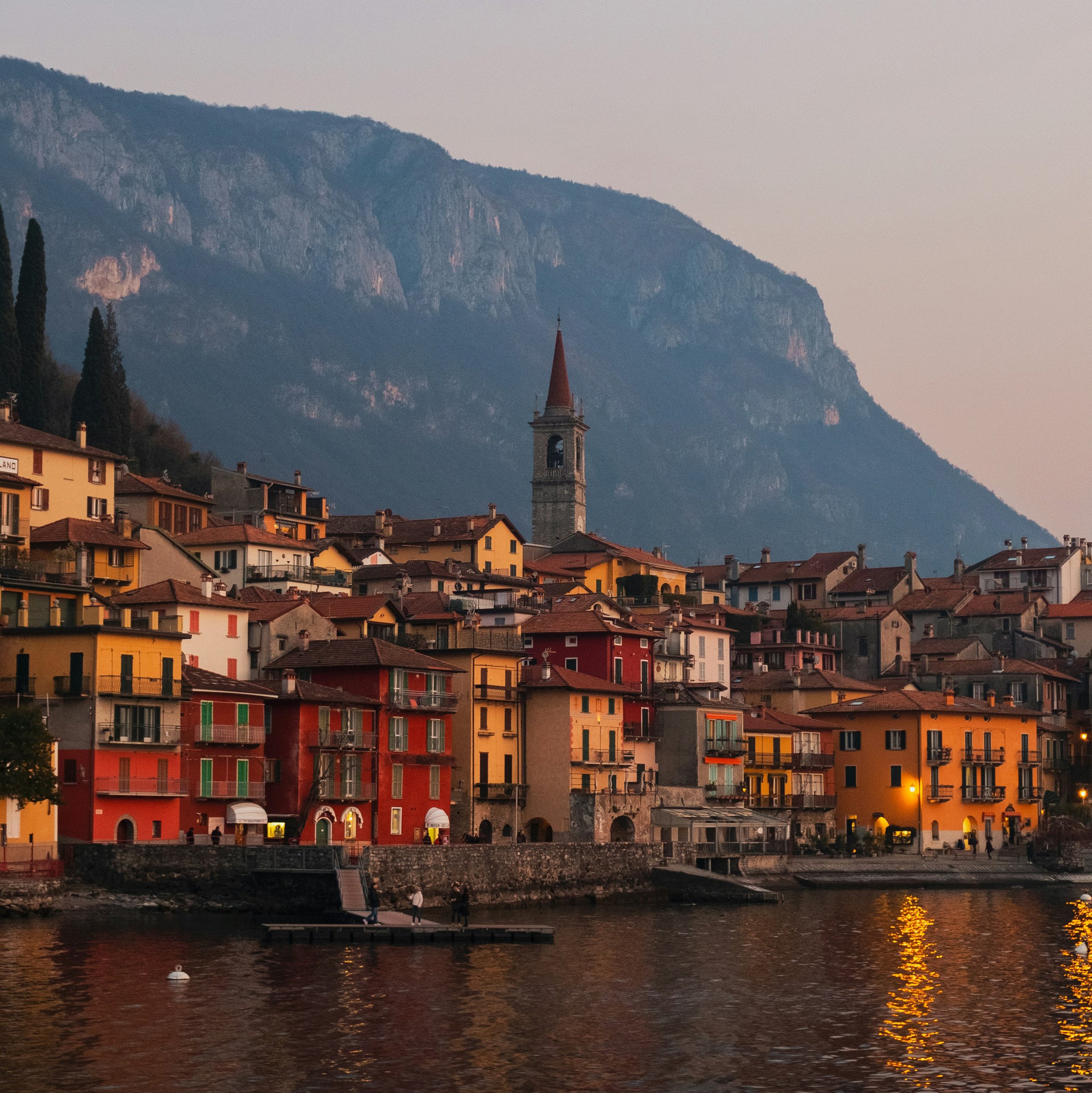
ONE MORE LOCAL, AND ONE GREAT VIEW
While you are in town, walk along the lakefront to the Tempio Voltiano, a neat neoclassical rotunda dedicated to Alessandro Volta, who was born in Como and who invented the electrical battery. The volt is named after him. There is something quietly pleasing about charging your phone in the town that gave the unit its name.
Then finish the way the locals do, on the funicular. It has been climbing from Como up to the village of Brunate since the 1890s, it takes about seven minutes, and it deposits you on what is essentially a balcony hanging over the lake, with the water spread out below and the Alps behind. Have a drink up there in the late afternoon, walk a little if you feel like it, and ride back down as the light goes.
WHY IT IS WORTH THE DAY
There is a neat logic to Como once you see it. The villages up the lake are where wealth went to relax, all gardens and terraces and long lunches. Como at the foot of the lake is where a good deal of that wealth was actually made, in dye vats and looms and drawing offices. It is the working city that made beautiful things, and it wears that history plainly, without much interest in charming you.
Give it a day rather than a train platform. Look at the silk, look at the buildings, ride the funicular, and you will understand the lake far better than the people who sailed straight past you on the morning ferry.